Nantes had been on our list for a good long time, but that’s true of many places. What finally tipped it to the top of our up-next list is it was smack on the route from where we were (Brittany) to where we needed to be (Paris). And we had time to dawdle. I thought we’d need it. We have friends who quite like Nantes and it looked good on paper. Our Michelin map gives Nantes 3 stars, their top rating. One star means, sure, see it, if you’re nearby. 2 means worth a detour, 3 means worth building a trip around.
Nantes is situated at the mouth of the Loire river and was a Roman port city. Then it was the seat of the duchy of Brittany which was ultimately headed by a shrewd woman, Anne of Brittany, who managed to become queen of France twice. It’s also the birthplace of Jules Verne, and though he lived most of his life in Amiens, Nantes gives him favorite son status.
And yet there’s another side of Nantes, that which has become a rallying cry, a warning sign in the French imagination. Crime rates and “incivilities” are rising; people look to Nantes as evidence of the good life escaping. The recent protests were more violent here than in other places. I’ve read things like: Angers (the next big town over) is so nice, but what a shame that it’s becoming like Nantes. Or how our new police chief in Montpellier said on his first day, I’m not going to let Montpellier become Nantes. So what’s going on in Nantes? Is it really on the downswing, or is this a blame-the-immigrants dog-whistle signal from the far right in France? I’m from Chicago, so I know there’s a politics of making a place the poster child of the decline of civilization.
I tried to approach Nantes with openness and curiosity. I’d like to think that’s my default state, but this time I felt I had to make an extra effort to guard against preconception. First impressions were good. Our apartment was by the splendid botanic garden, which is conveniently located right across from the train station. As an amateur botanist, this was a major bonus. So far so good.

Our first disappointment: our apartment was seriously over-furnished and smelled of dog. Ok, you don’t always get what you want. We can get over it. The next disappointment: how far we’d have to walk to get to a market or a boulangerie. In a town the size of Nantes, I couldn’t imagine it. Surely, we chose our neighborhood poorly. But no. In our week there, we sampled other neighborhoods and found them strangely lacking.

We did finally find a pastry shop and inquired about the regional treat. There’s always a local, traditional pastry, often unusual looking and usually delicious. Nantes’ sweet treat is the unimaginatively named Nantes cake. What I like about local specialties is they’re often slightly misshapen, like your grandma would make. Gâteau Nantais looked factory made. I asked what the traditional flavor was. Rum was the answer. Ok, give me a rum cake.

Walking away, treat in hand, I started to think, hmm, rum. That means the traditional cake isn’t that old. Rum. That means slavery, I thought, as I looked up to see a monument to abolition. Nantes was a major slave trading port. Oh. Damn. And the cake sucked. Heavy, industrial and sickeningly sweet.

We ditched the bad cake. We were headed to the island, specifically, to Les Machines de l’Île, an art park/kid’s steampunk maker space featuring mechanical animals inspired by Leonardo da Vinci and Jules Verne. We stayed in the public areas because the lines were long and it was very family oriented. We arrived in time for the elephant walk. It was a marvel.

The carousel


But wait, there was more public art! There’s an annual public art exhibition called Voyage à Nantes. All over the city we stumbled on rather amusing statues, as well as other art shows.
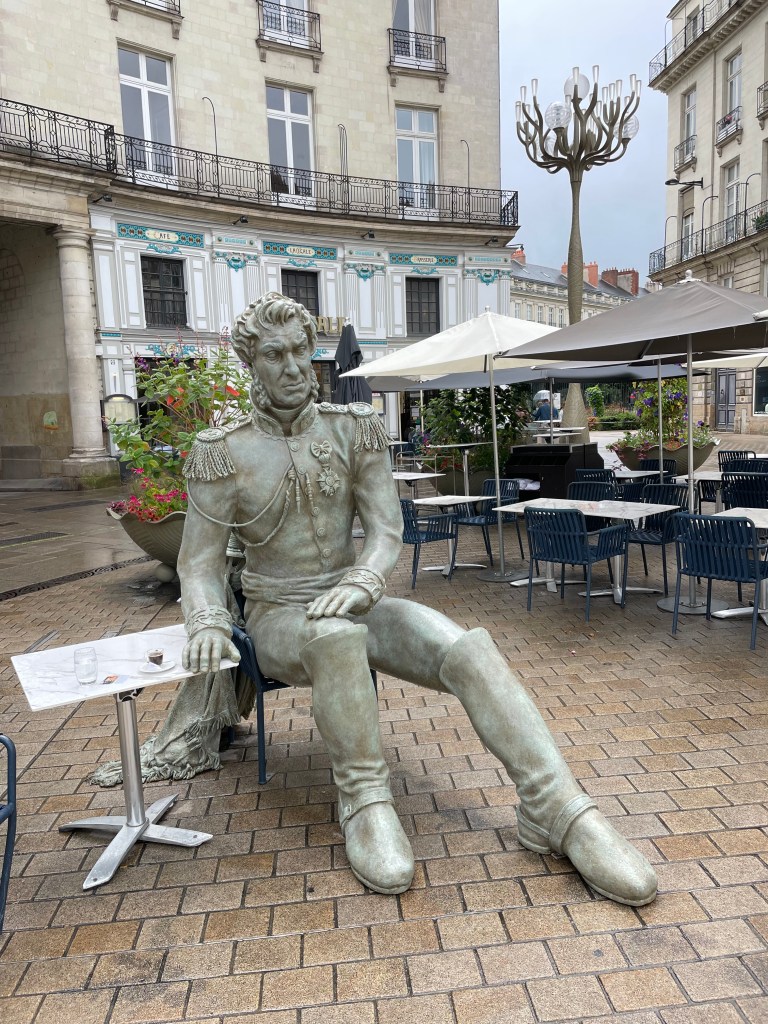


The Lieu-Unique (unusual or unique place) is an art space/theater/cafe assemblage inside the old Lu cookie factory. You may know Lu as the brand making the Little Schoolboy cookies.

Naturally, there’s a cathedral


Right in the center of it all is the castle of the dukes of Brittany.
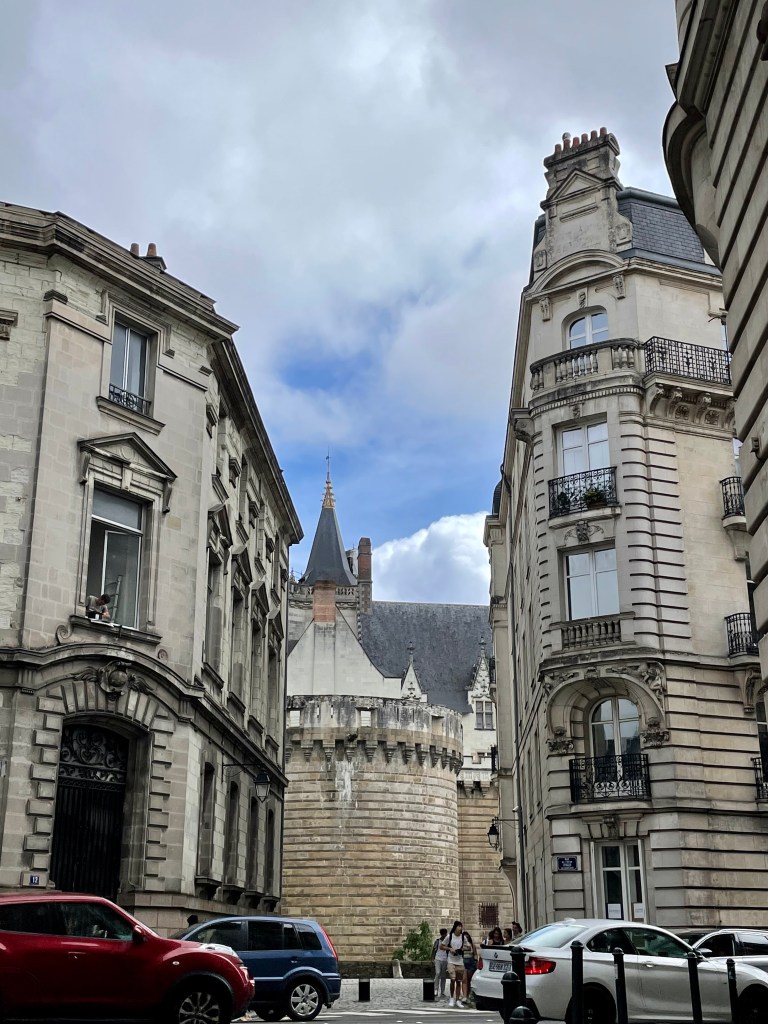

Looks great, right? Turn around. This is the view from the castle walls. There’s a vast, industial, car-centric wasteland here.

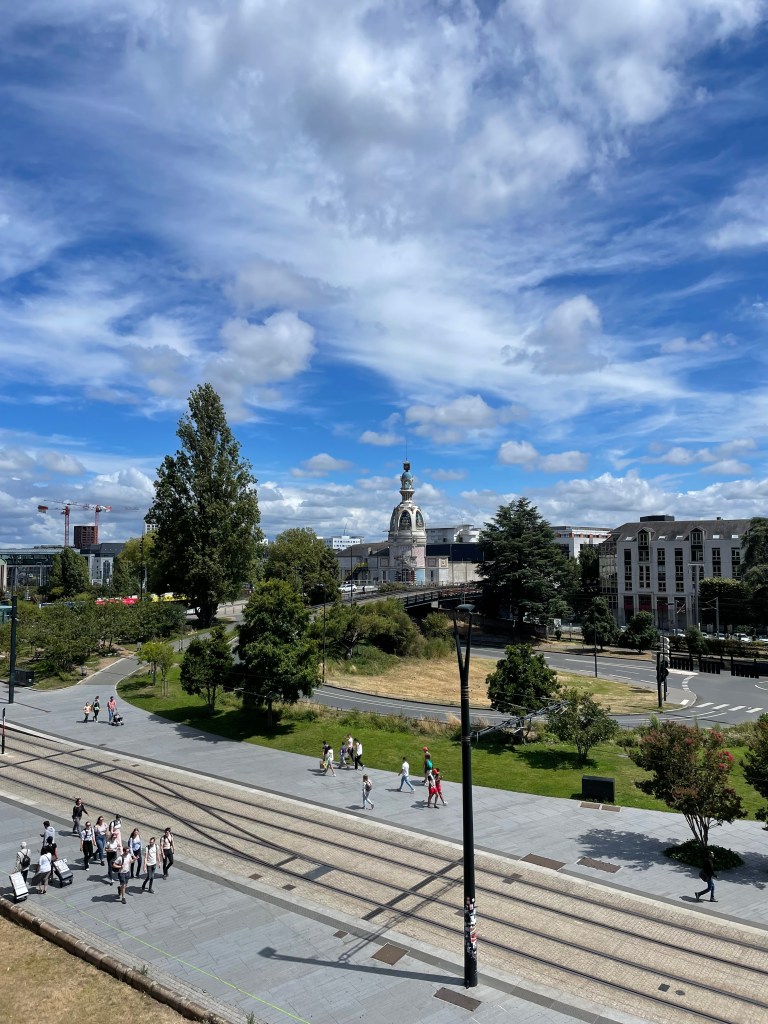
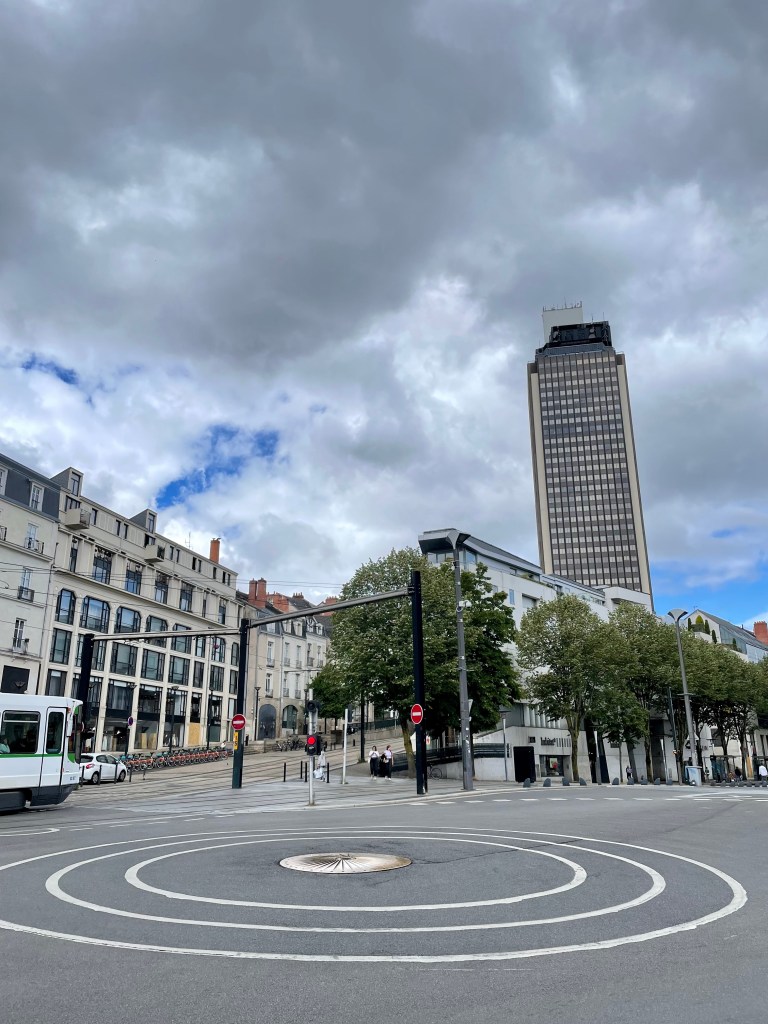
The very center of the city has an utterly conventional quality. I haven’t done the research, but it’s my guess that all those wealthy slave traders turned the city into a monument to their money, status, and bourgeois ideals.


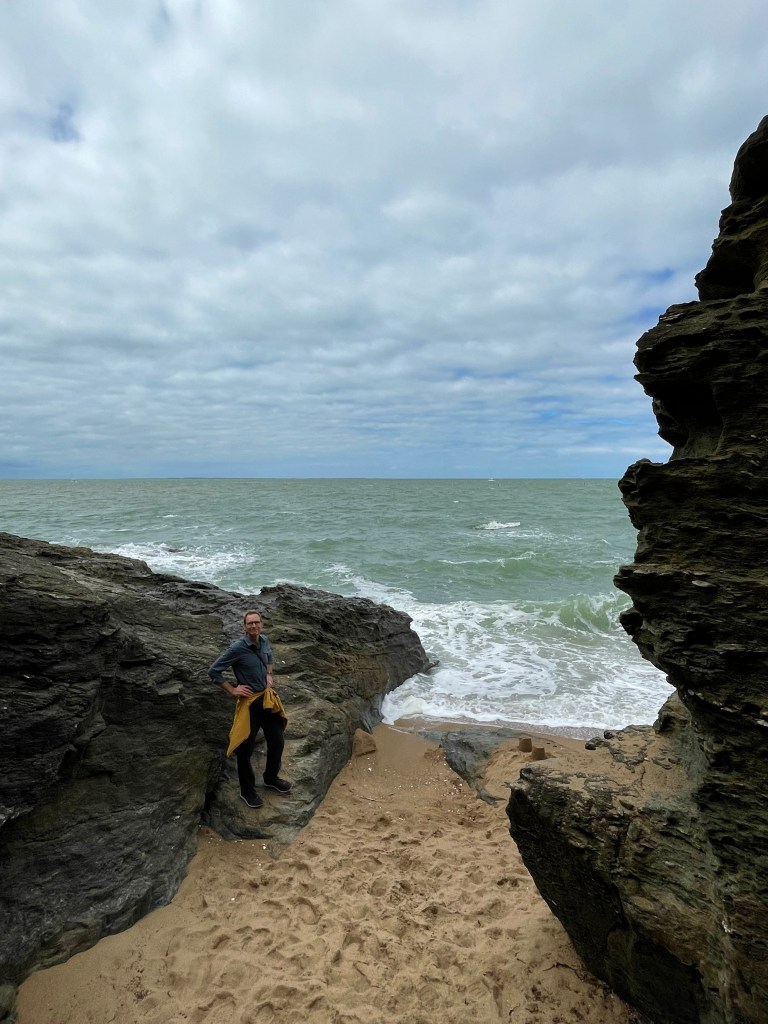
There’s a boring, staid, sameness to the streets. Walking was a chore instead of a delight. Not to mention, we ran into aggressive panhandlers in Nantes far more often than in any other French city we’ve been to. The museums were disappointing. We bailed, scramming out of town on a day trip to the town seaside town of Pornic, which we took to calling Not Nantes. I was counting down the days until we could leave.

So pleasantly not Nantes
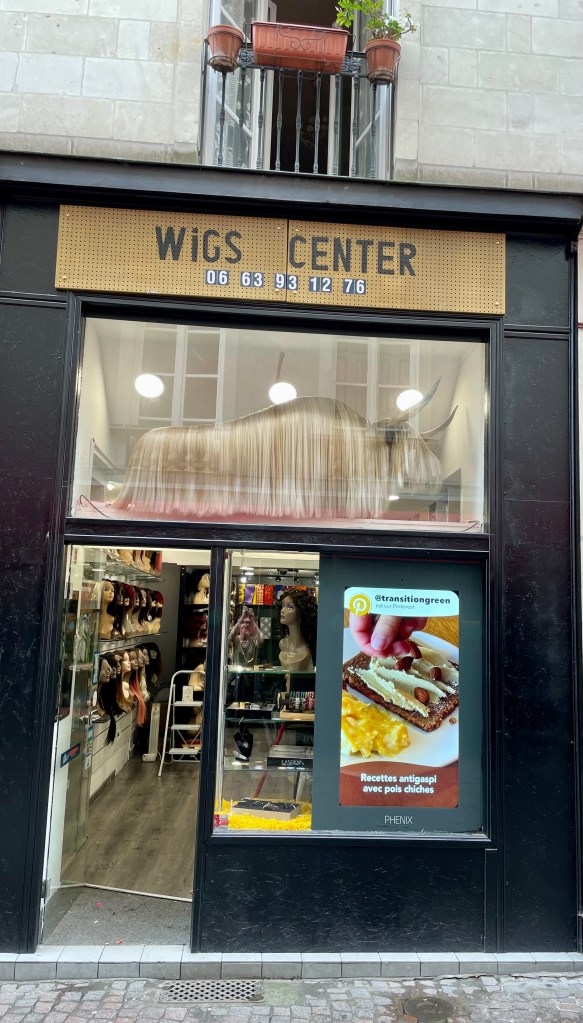
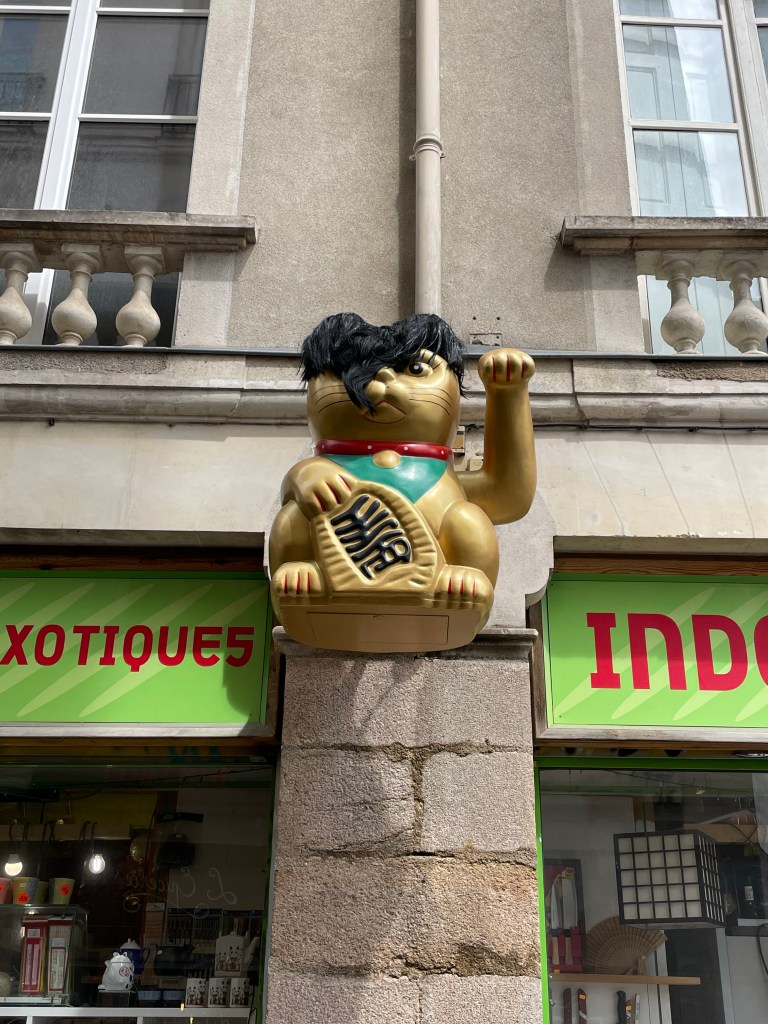
But then on our last day, after we were frustrated and thwarted in our attempts at lunch, we crossed the tracks to a small neighborhood we thought we’d already seen. We immediately felt more at home in the narrow streets. It appeared to be an immigrant neighborhood, and finally, there were things to marvel at, like how this wig shop has outfitted the neighboring mascots in fabulous hairdos.

We stumbled onto a Cambodian restaurant. We were one of the first to arrive, so we were chatting with the owner. I asked her where she was from (Phnon Penh), and how long she’d lived in France. She said she arrived in 1974, after fleeing the Khmer Rouge. I asked her why Nantes? She said she was married and lived nearby, and when she divorced, a friend suggested she join her in Nantes. I asked how she liked it. She said she was very happy here. Nantes is indeed a town with a large immigrant population and she felt at home. Everyone was from somewhere else and she didn’t experience much racism here, in contrast with her previous town. And that moment turned everything around. I may never love Nantes, but I have a new appreciation for it. We let her choose what we ate. It was superb.
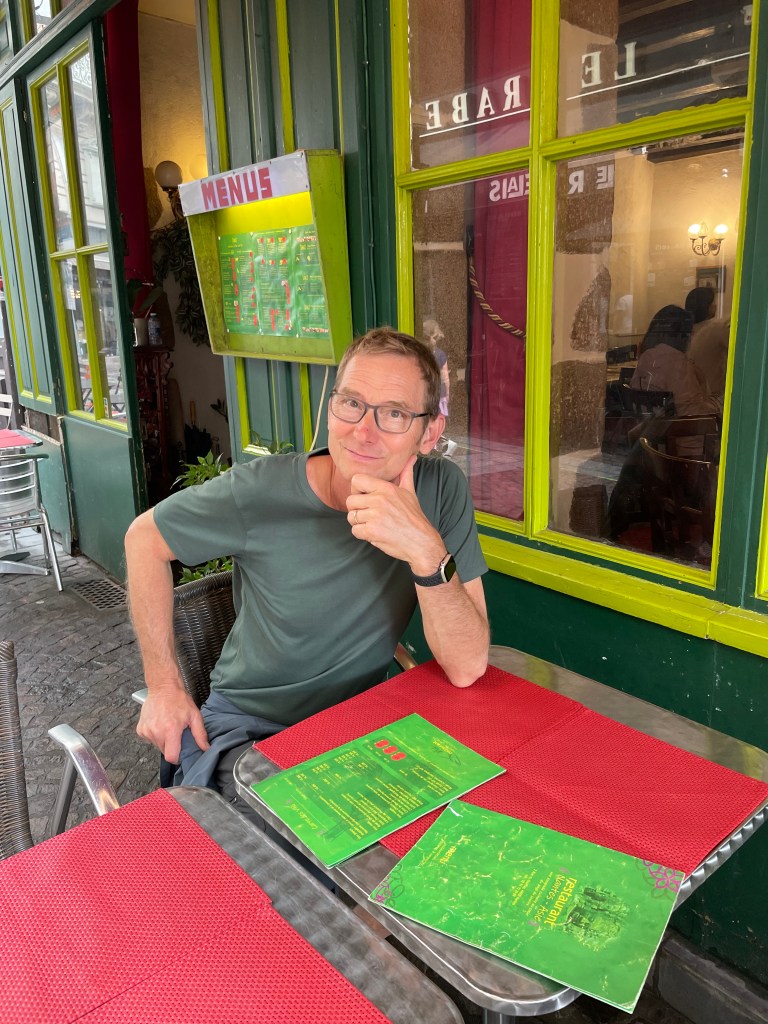
Cheers!
Maer

 The Let's Get Lost Game