The summer travel plan was simple. In total: be cool, stay cool. See the solar eclipse. Meet up with friends in Pamplona and slowly wind our way back to Montpellier in their car through the Spanish side of the Pyrenees. Check, check, check, check…wait, damn. Fires.
There’s only a few practical spots to cross the Pyrenees. We’d already changed our trajectory once due to a fire when we got word of a much more serious fire encroaching on another of our planned stops. The hotel we’d booked said they weren’t currently affected, no refunds. But the towns surrounding them were under either evacuation orders or shelter in place orders due to smoke, and the fire was still uncontrolled. Then I saw a photo in the paper of a plexiglass box full of bones being carried through smoke. Firefighters were evacuating the bones of the Aragon kings from their former final resting place in a monastery a stone’s throw from where we were supposed to be staying. If it’s not even safe for the dead, I’m not going there. And so, another pivot in this summer’s game of climate roulette.
We needed an emergency roof over our heads so we headed to Pau, a lovely city we’d all been to before. Nothing new to report except that I was washed over with a feeling of relief. France is still my happy place. I love the food, the culture, the huge variety of landscapes, and especially the language. Nothing against Spanish, but to me, French is music and not just rapid fire ratatatat. Not to mention that my French is vastly better than my Spanish so I could relax and not mentally rehearse any interactions.
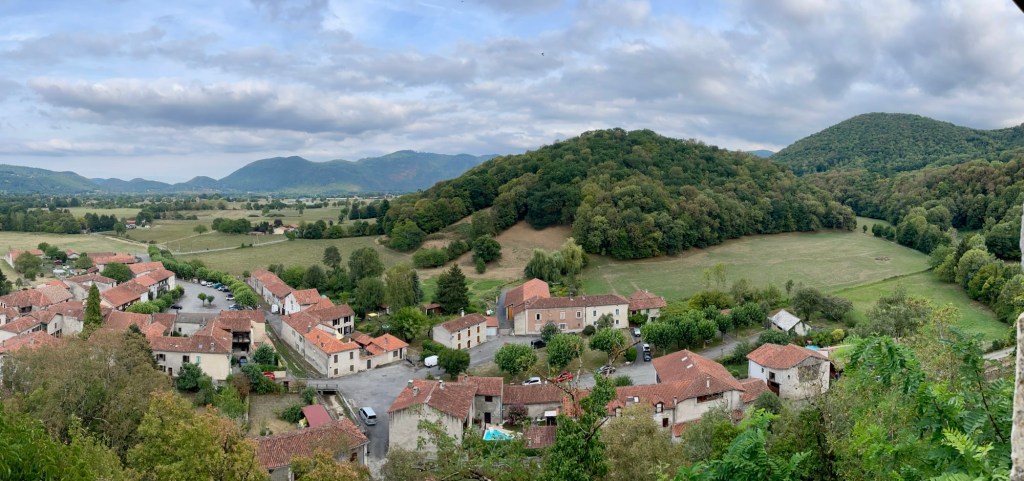
Our last destination before home was Saint Bertrand de Comminges and I’m going to be recommending it to everyone and anyone whose ear I can bend. It was a sheer delight. It felt like magic that we ended up there. We wound up staying for 2 nights which was perfect.
St Bertrand is one of the Plus Beaux Villages of France. I’ve written about them before. They’re small towns, no more than 2,000 residents and often much fewer. They must be beautiful (hence the name), and they must have at least 2 protected or remarkable sites. Plus Beaux Villages always warrant a stop and a spin through them if you’re nearby, rarely are they destinations unto themselves or worth an overnight. This one very much is.
First, the history. St. Bertrand was an important Roman town and has ruins of everything that goes with that in the lower village. It’s where Herod, (yes, that Herod) was exiled and died. He reportedly brought his daughter Salome along, but maybe that’s just legend. No word if he also brought with him the head of John the Baptist, which eventually wound up in Amiens cathedral (one of 4!), but I digress.
The ruins of the ancient Roman city, plus an early Christian basilica are down on the flatland. To get to the village of St. Bertrand, you climb up, up, up. Or drive, as we did. Since we were spending the night, we were allowed to park inside the upper city walls.
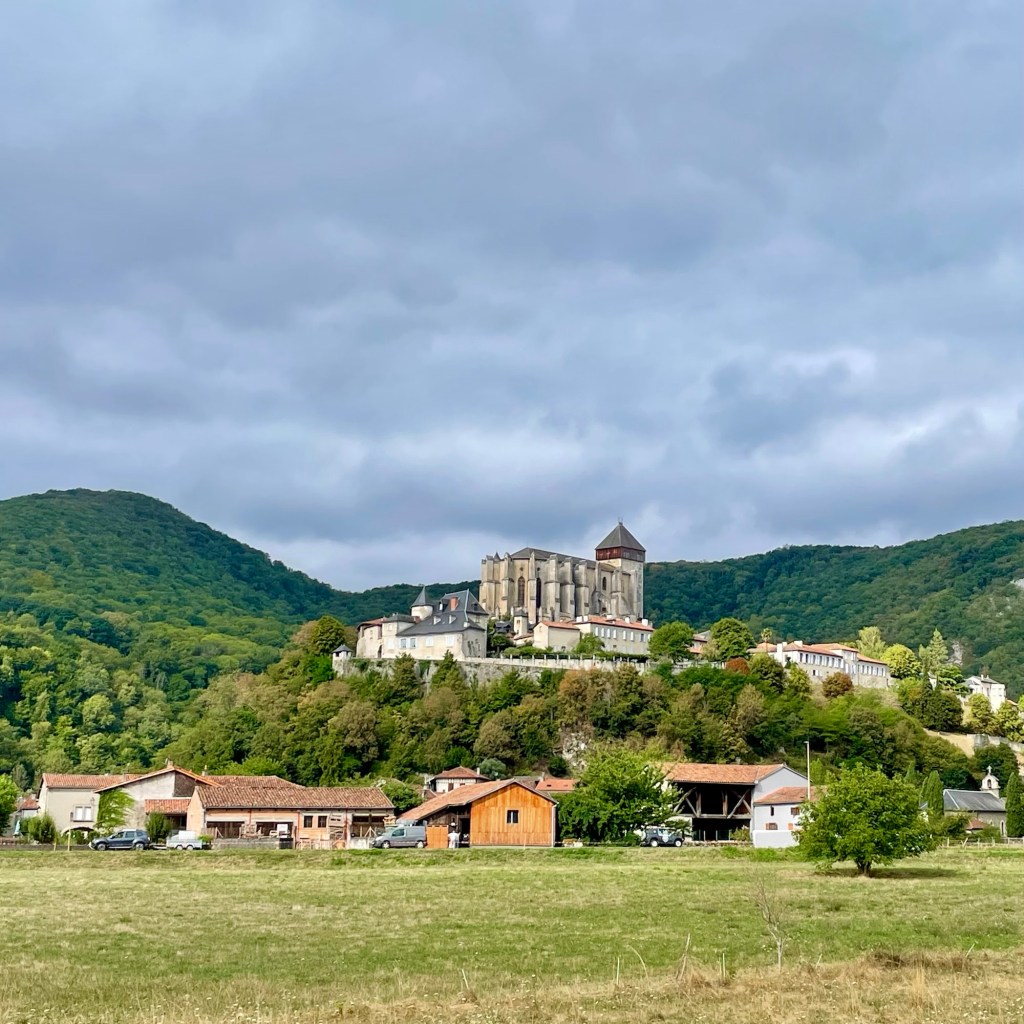
It’s a beautiful town, with winding streets and interesting architecture everywhere you look.
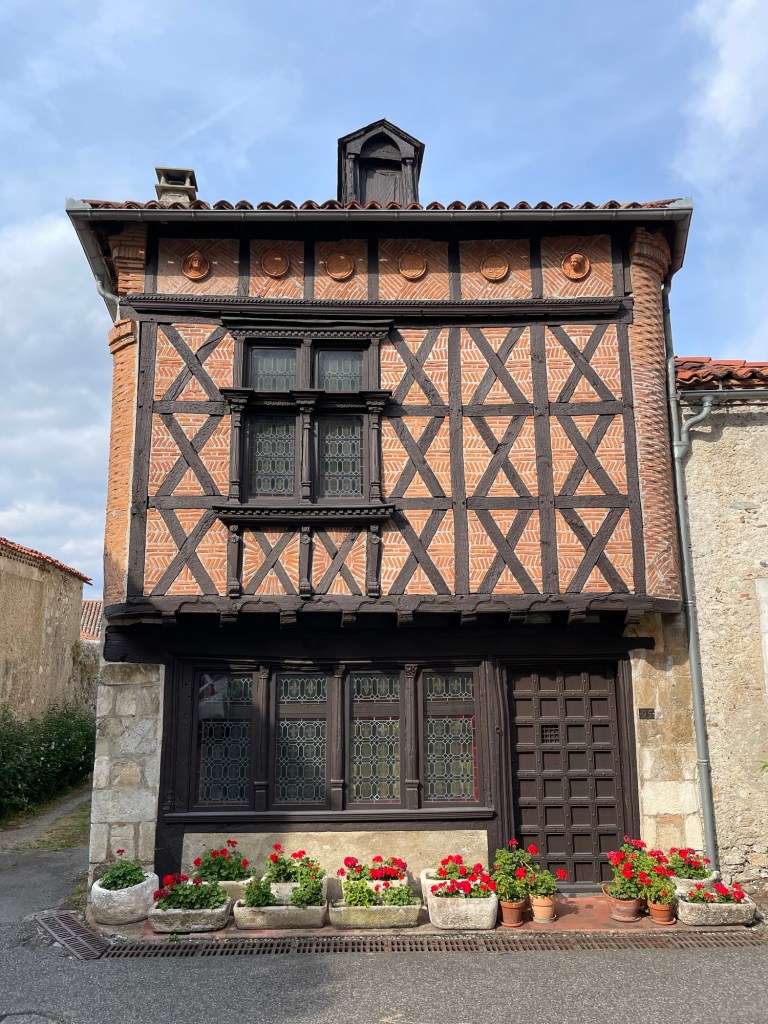
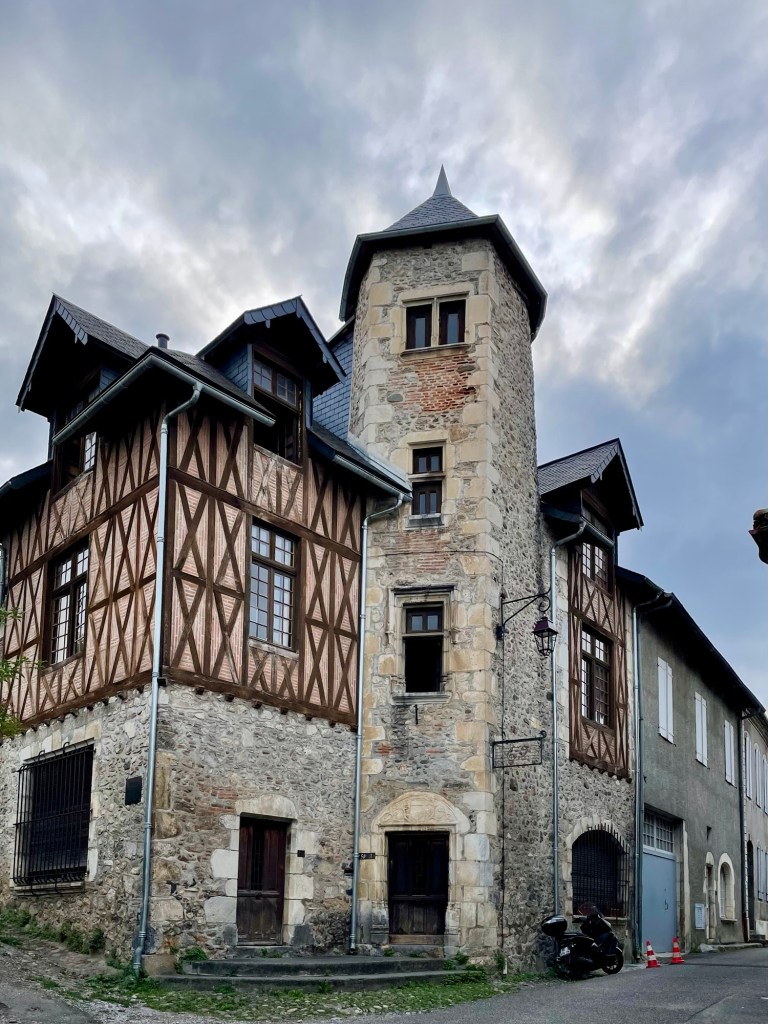
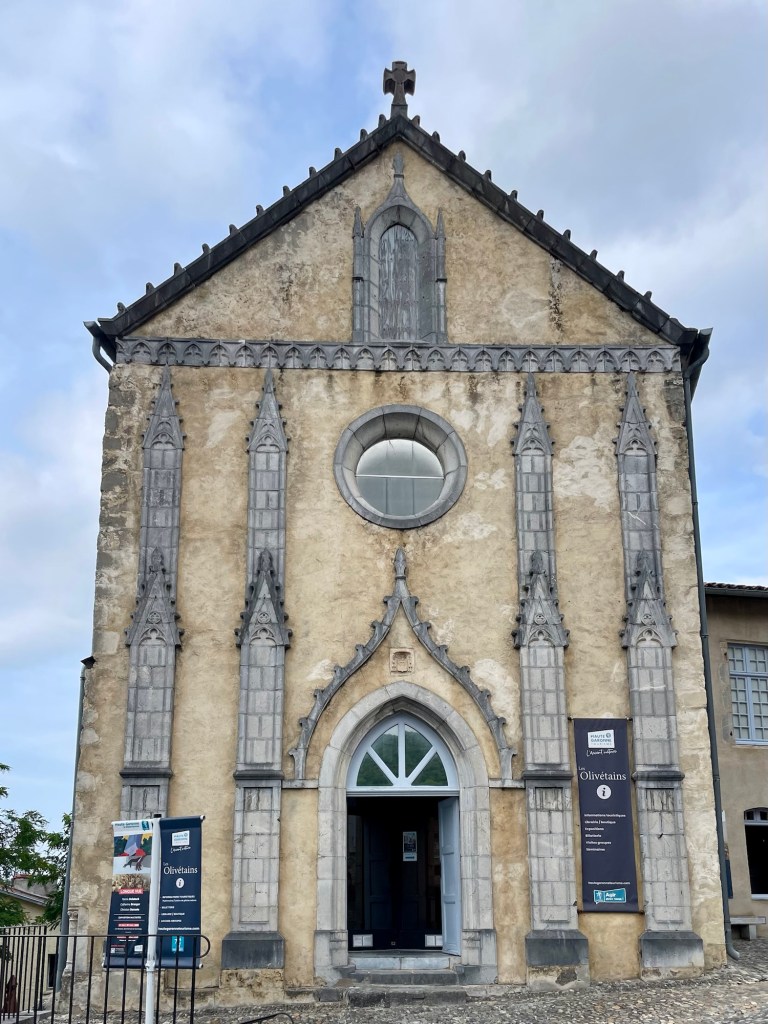
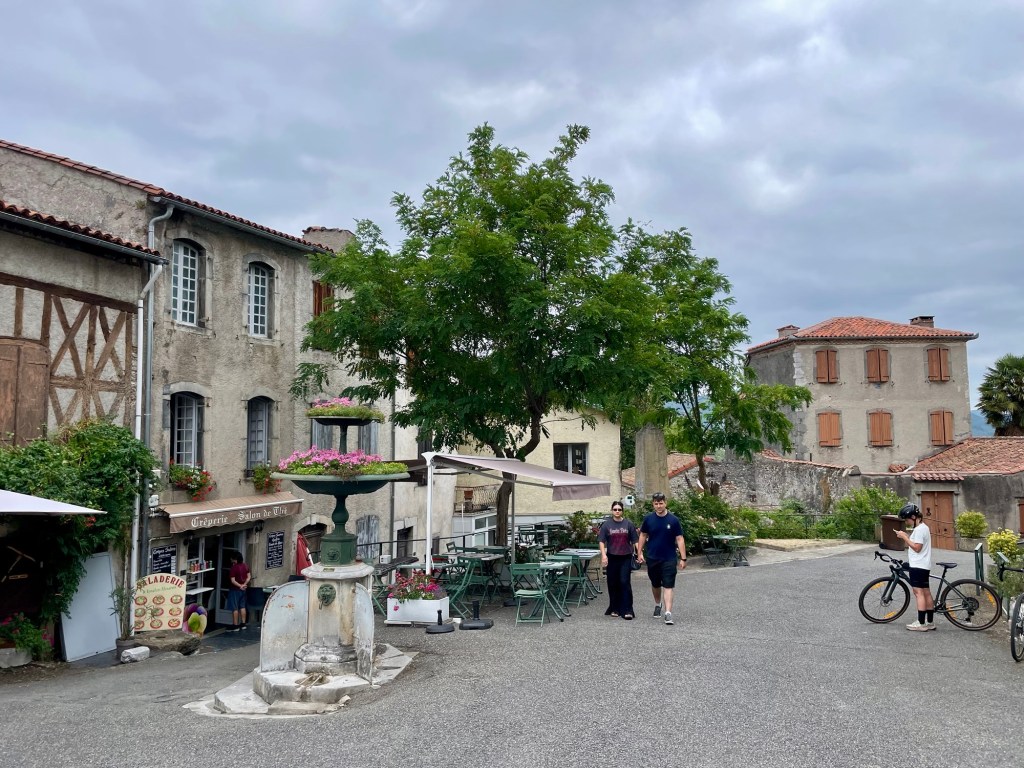
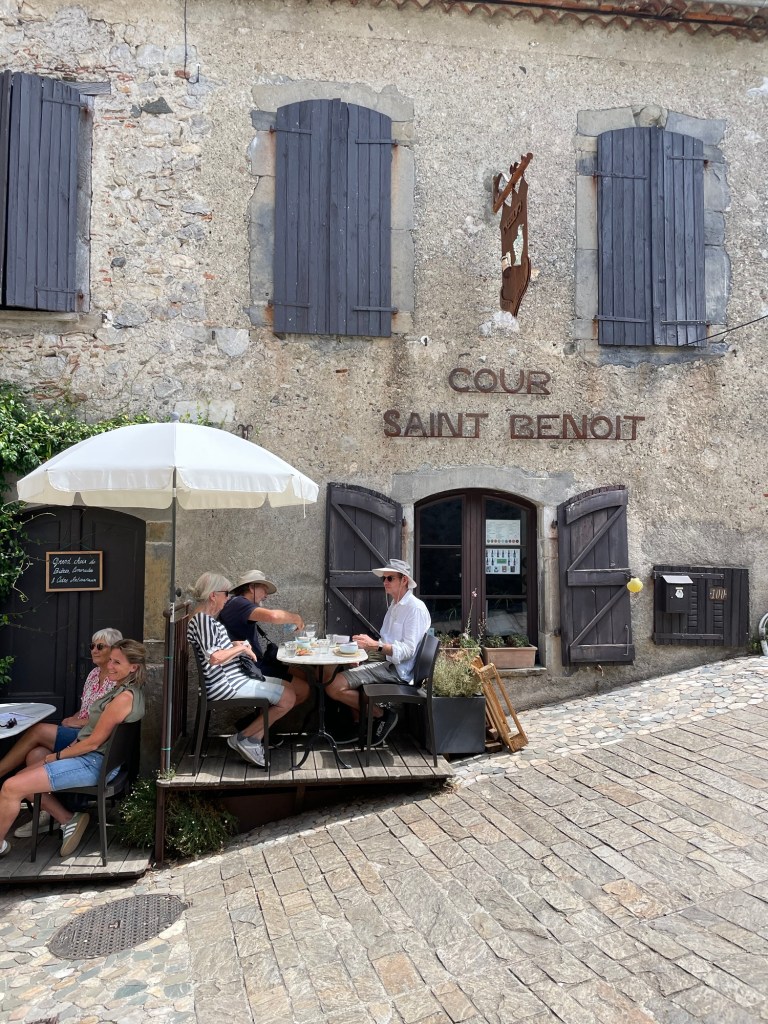
There’s a number of cafes, something of which not every Plus Beau Village can boast. Heads up if you’re spending the night, the cafes are oriented to the day trip traveler and close early. Our hotel (otherwise wonderful) had a restaurant that is the only game in town for dinner. It sufficed, nothing more.
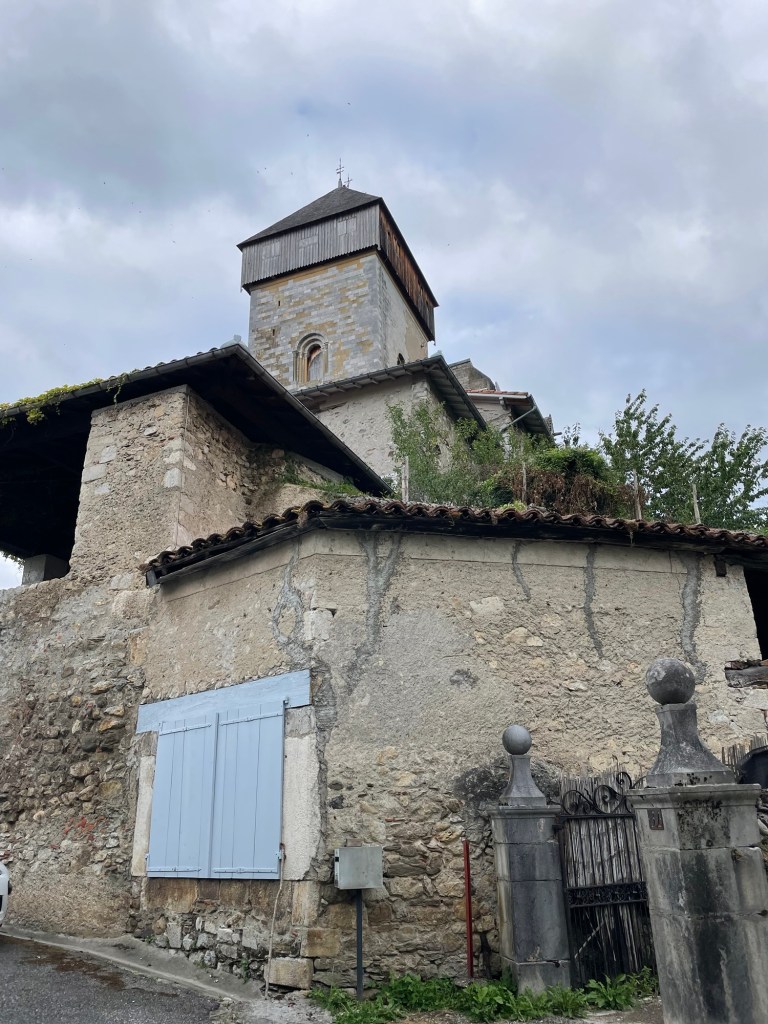
But the knockout punch is the cathedral. Construction began in the 12th century and as these things went, continued for centuries. The facade is rather plain and unremarkable, with a bizarro Home Depot shed at the top of the tower. It’s so unremarkable that I neglected to take photos. Needless to say, I wasn’t expecting much inside.
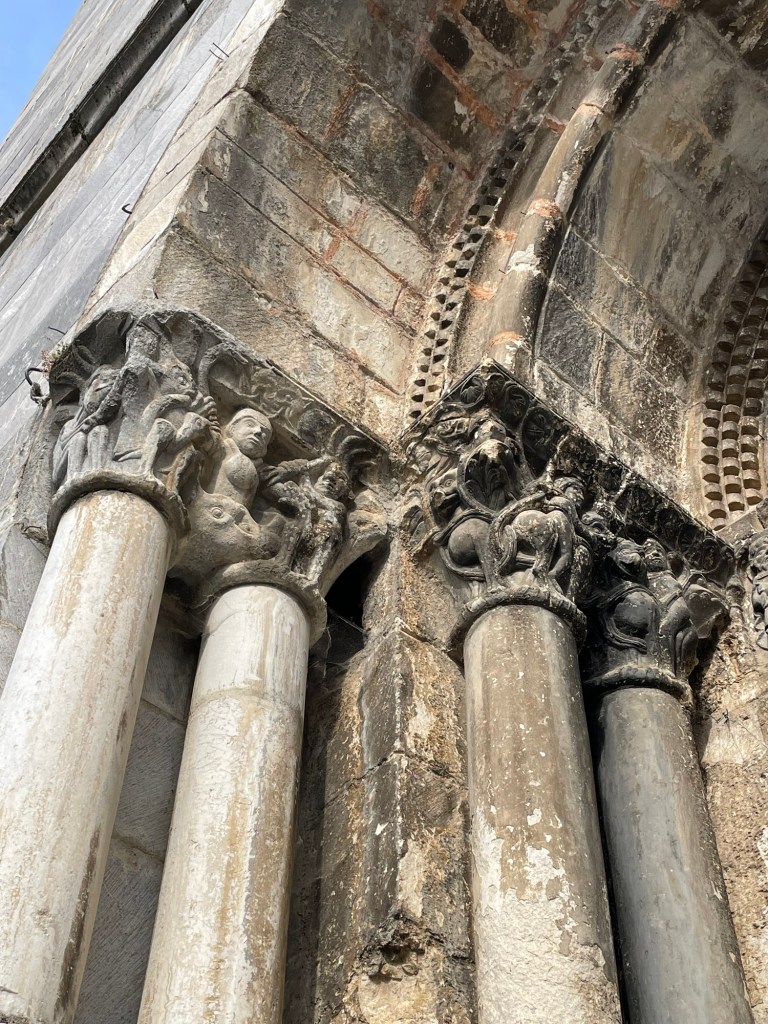
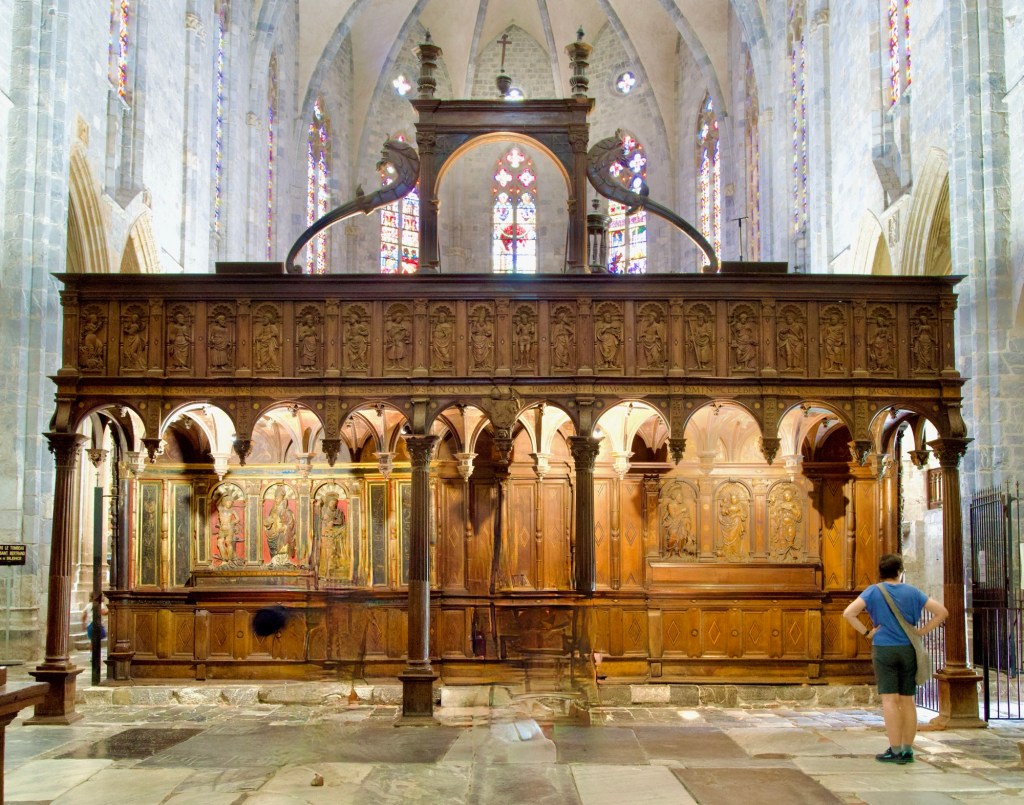
But no! Wait, I mean yes! Inside! It all survived! Untouched by fires, wars, or revolutions. It even has an intact jube which were eliminated by decree by the church in the mid 1500s. A jube is a partitioned part of a church to separate the lay people and pilgrims from the ordained, in other words, to keep the riff raff out. Very few entire jubes survive.
The exterior of the jube, for us hoi polloi :
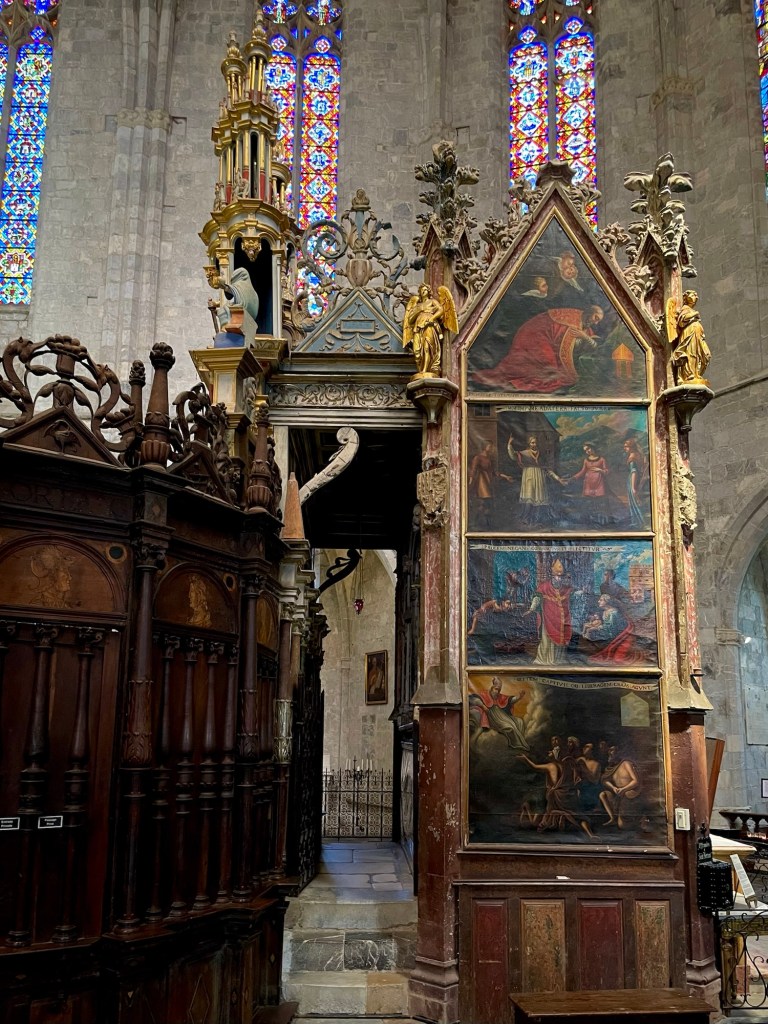
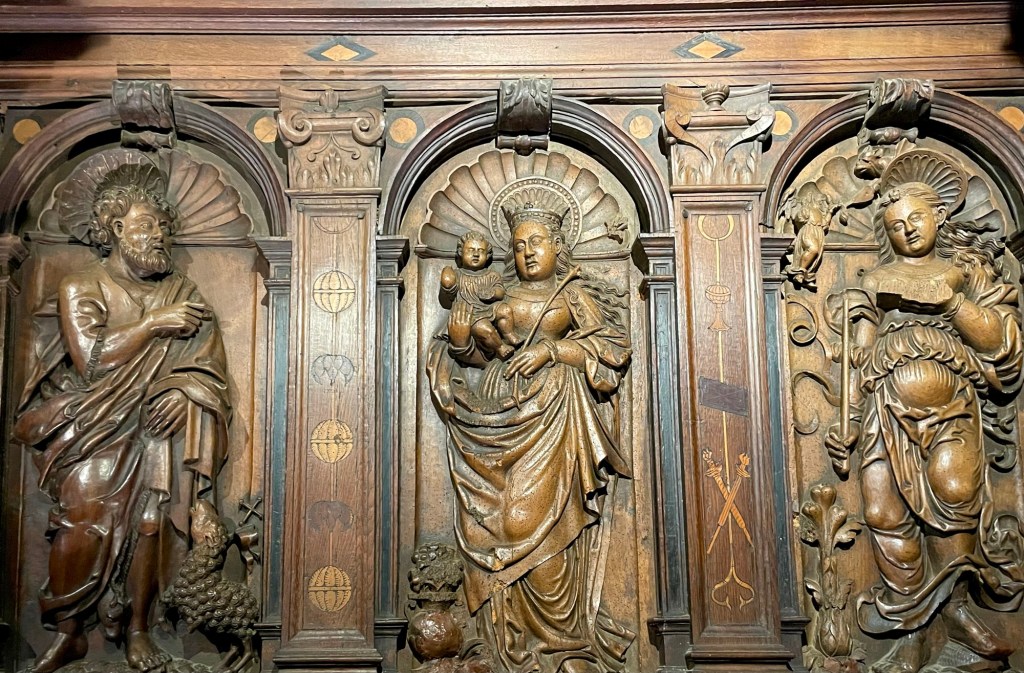
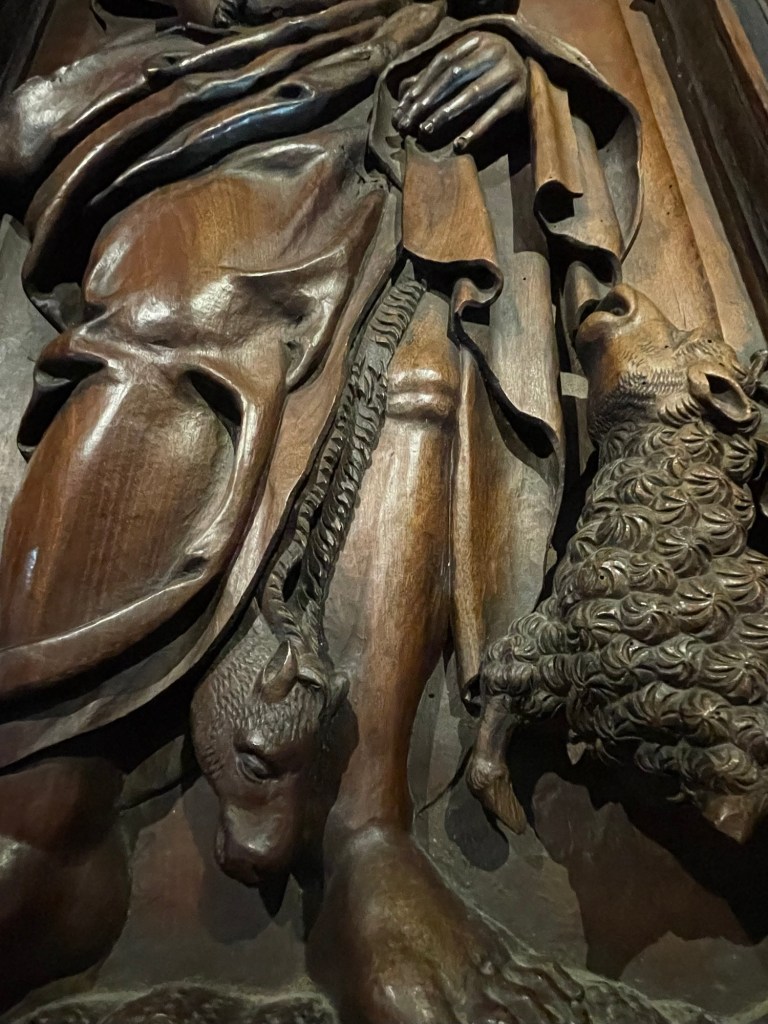
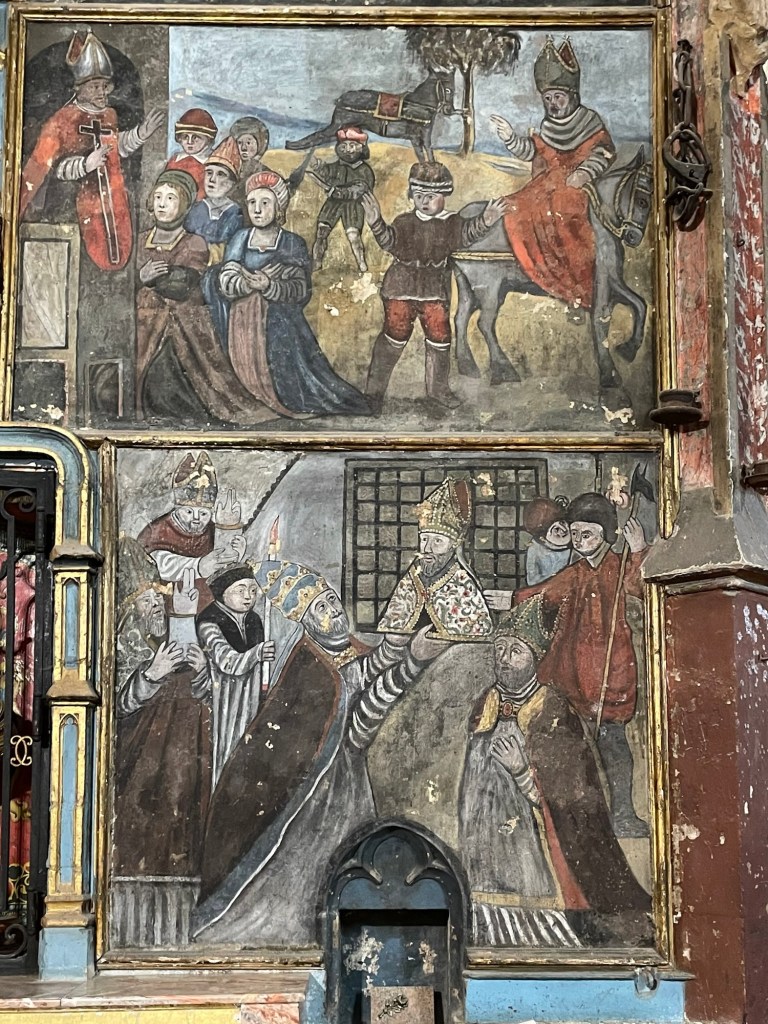
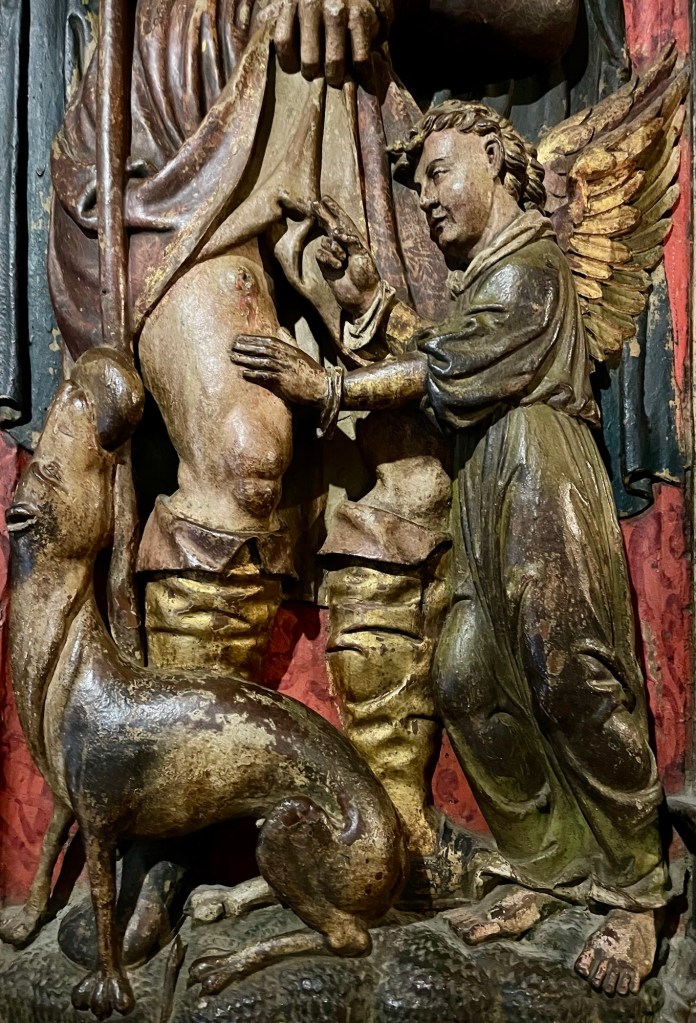
Inside are the individual stalls for the monks.
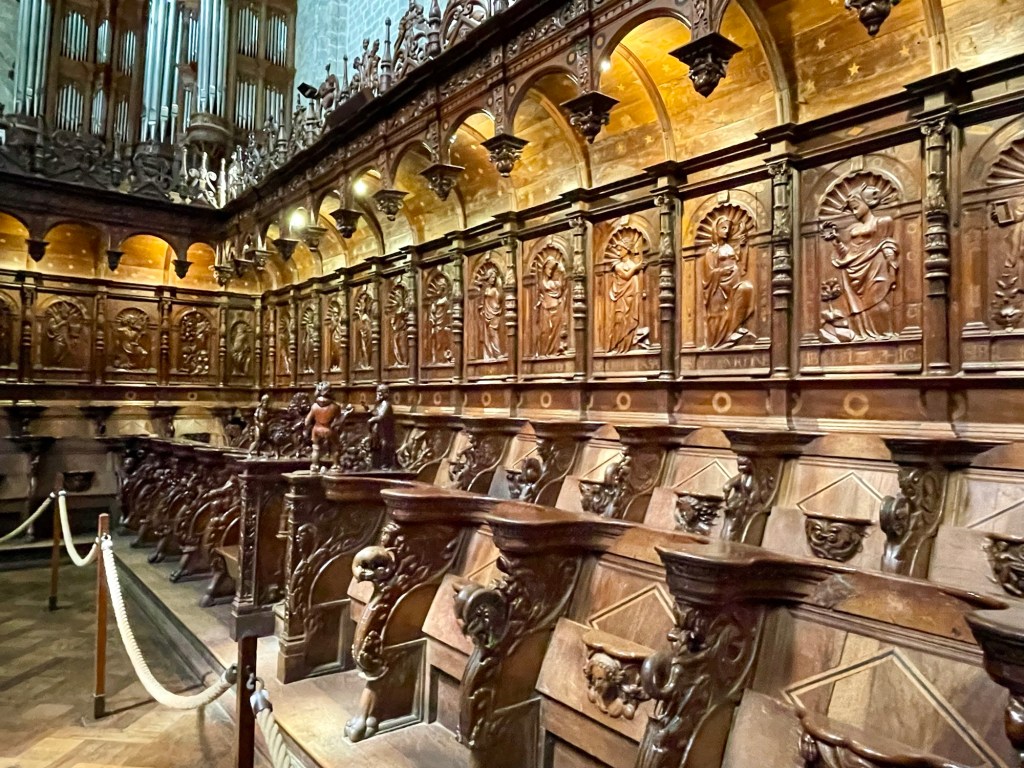
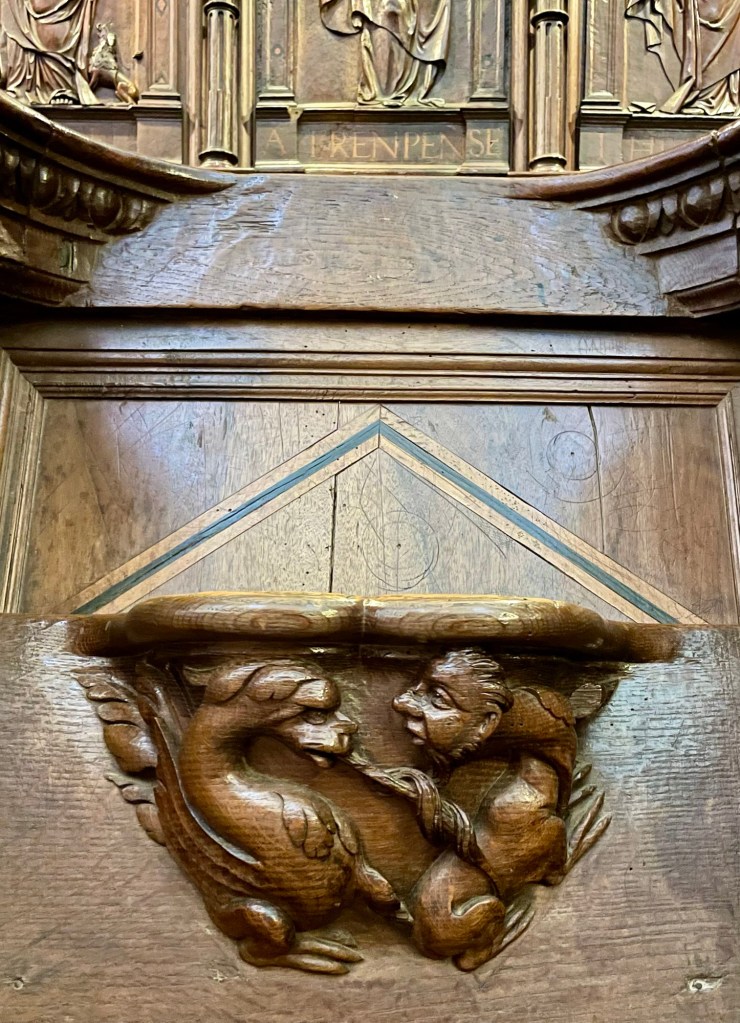
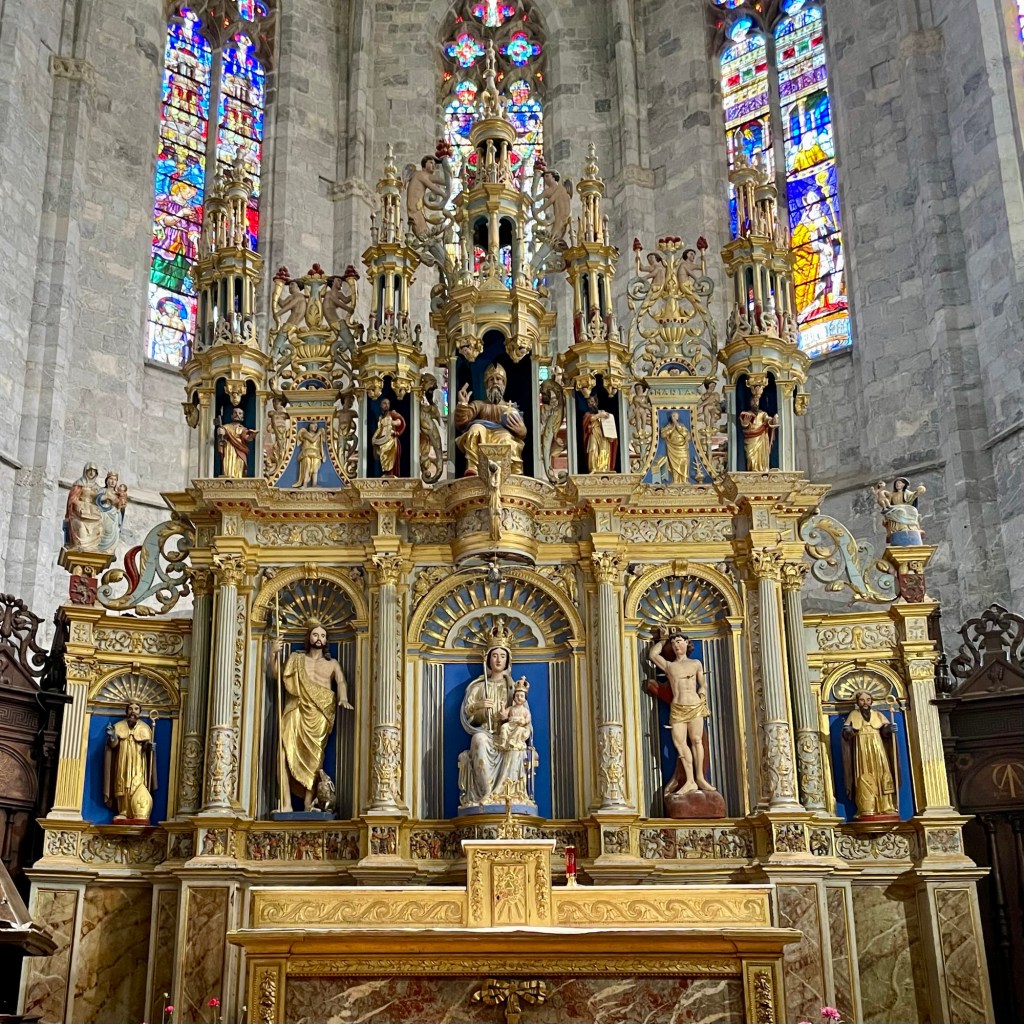
The interior altar
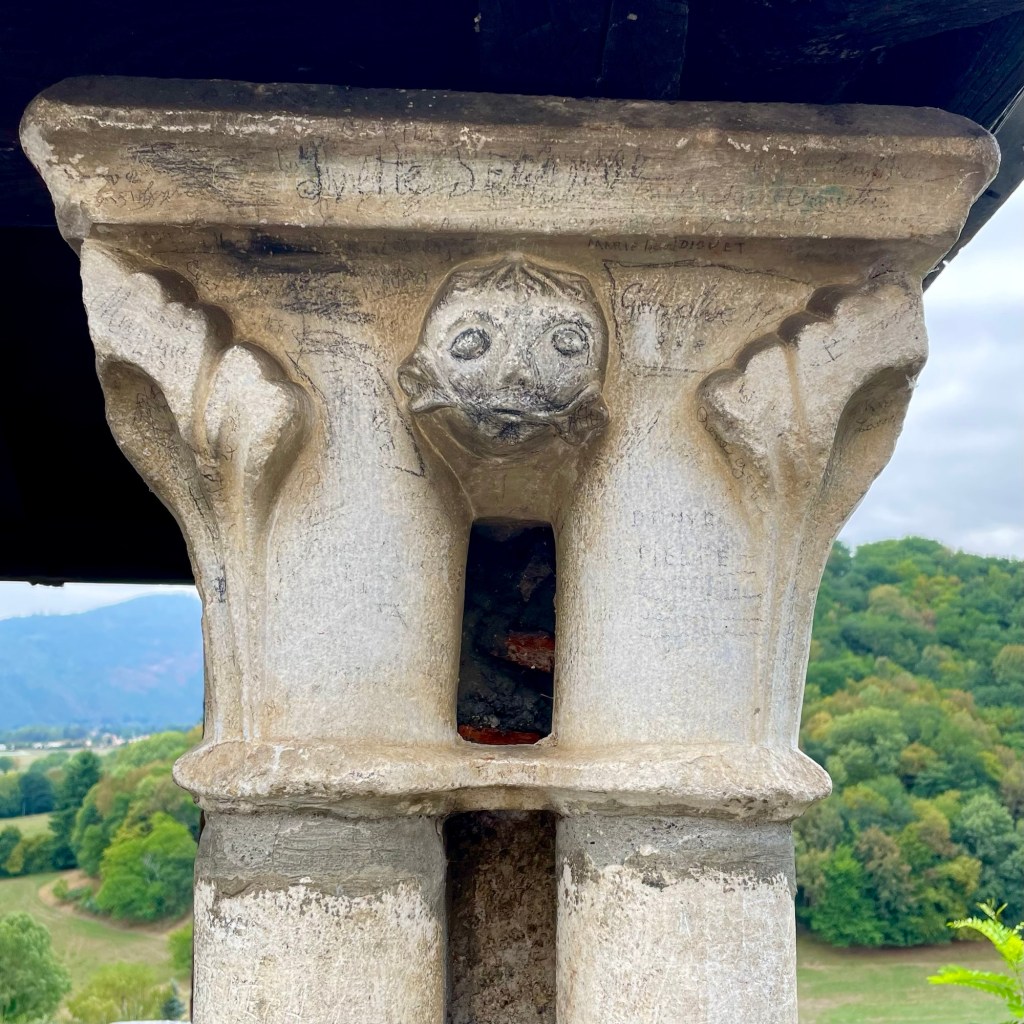
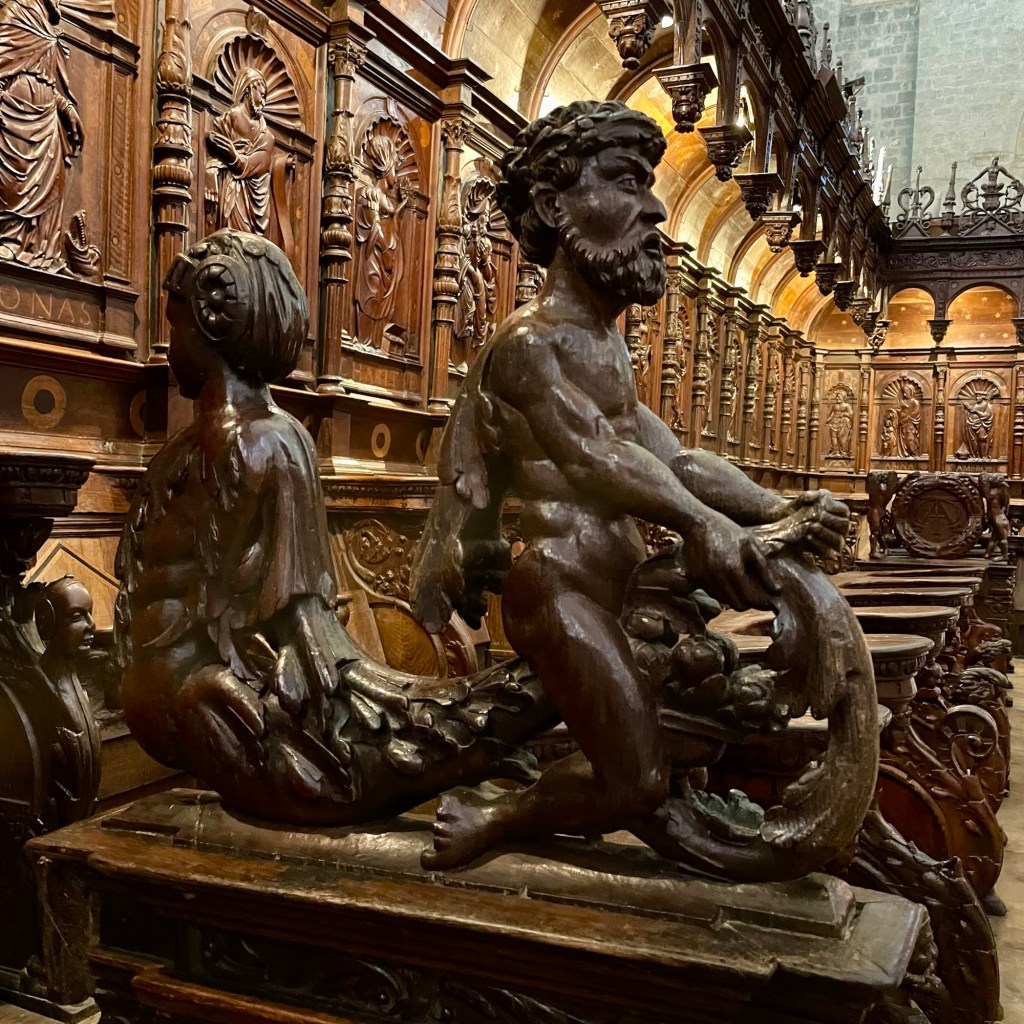
There’s a few delightfully questionable sculptures
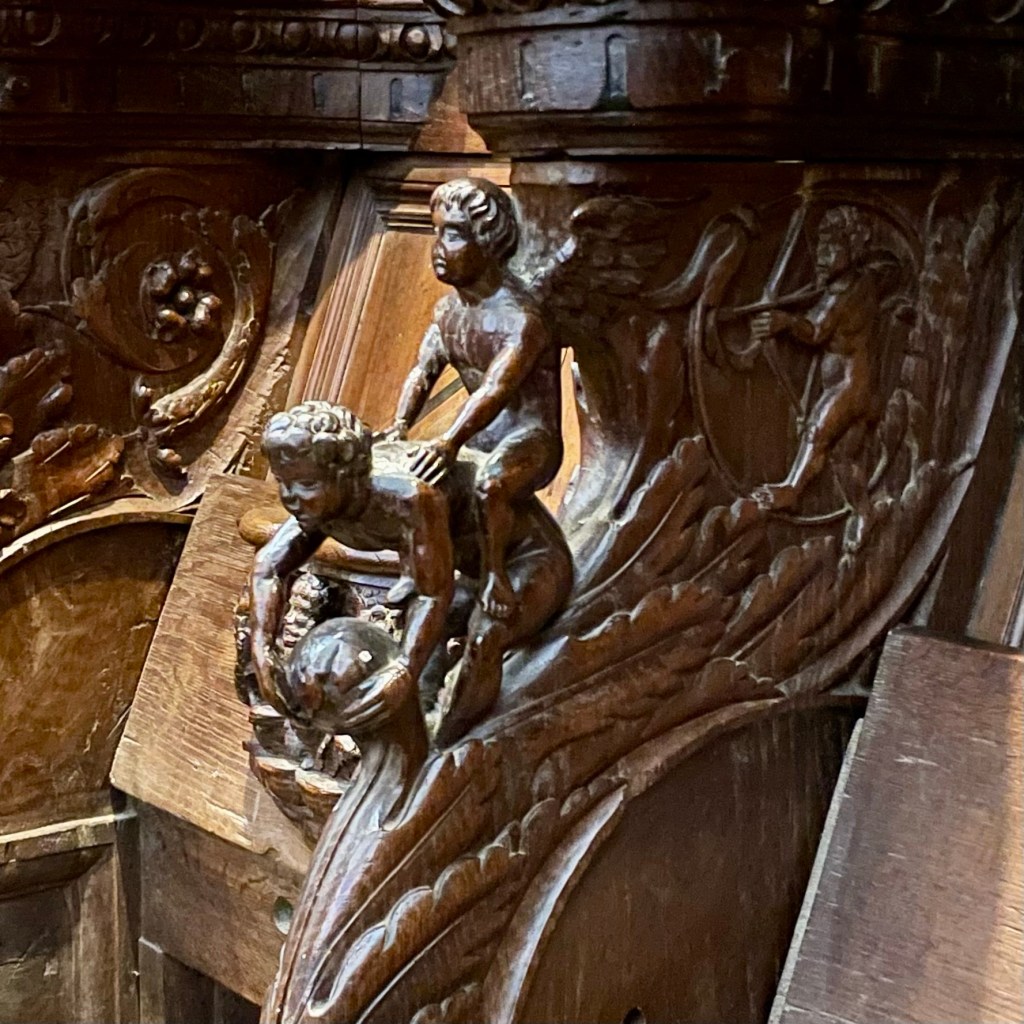
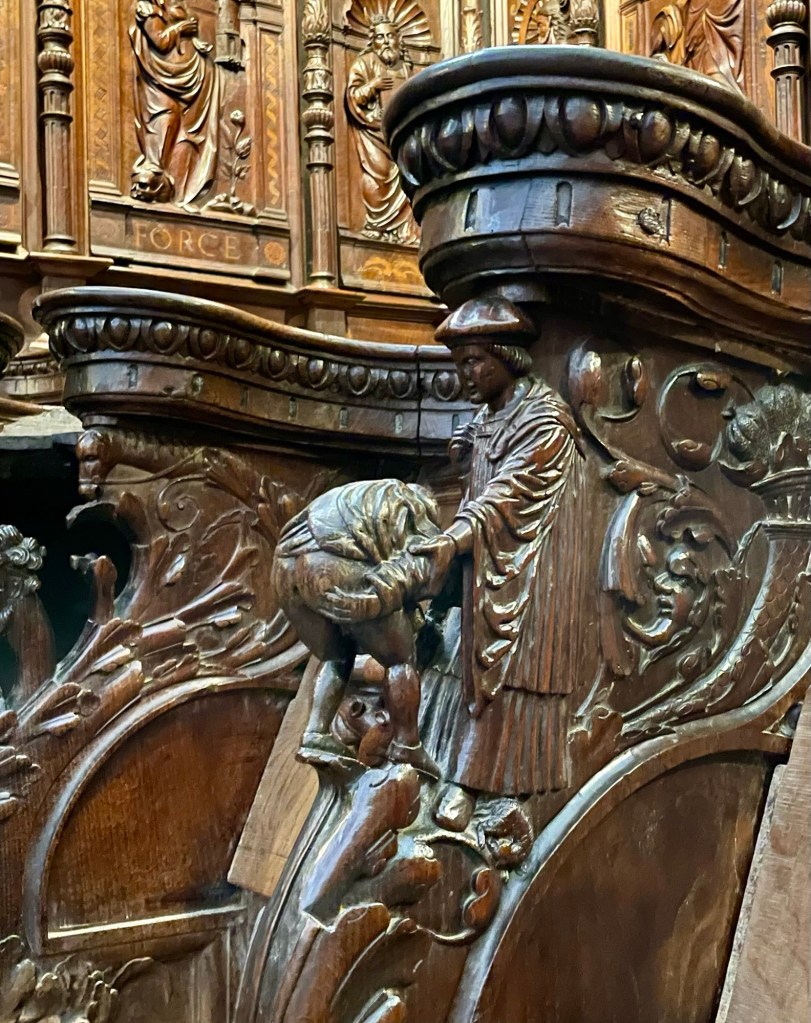
Back outside, the cloister
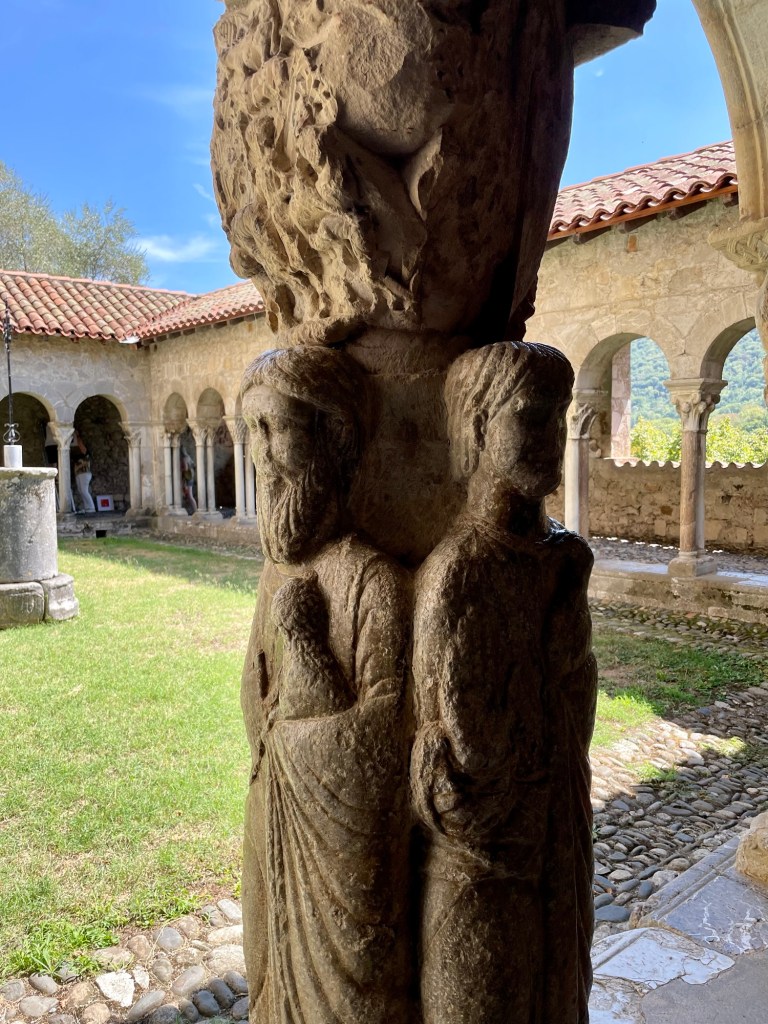
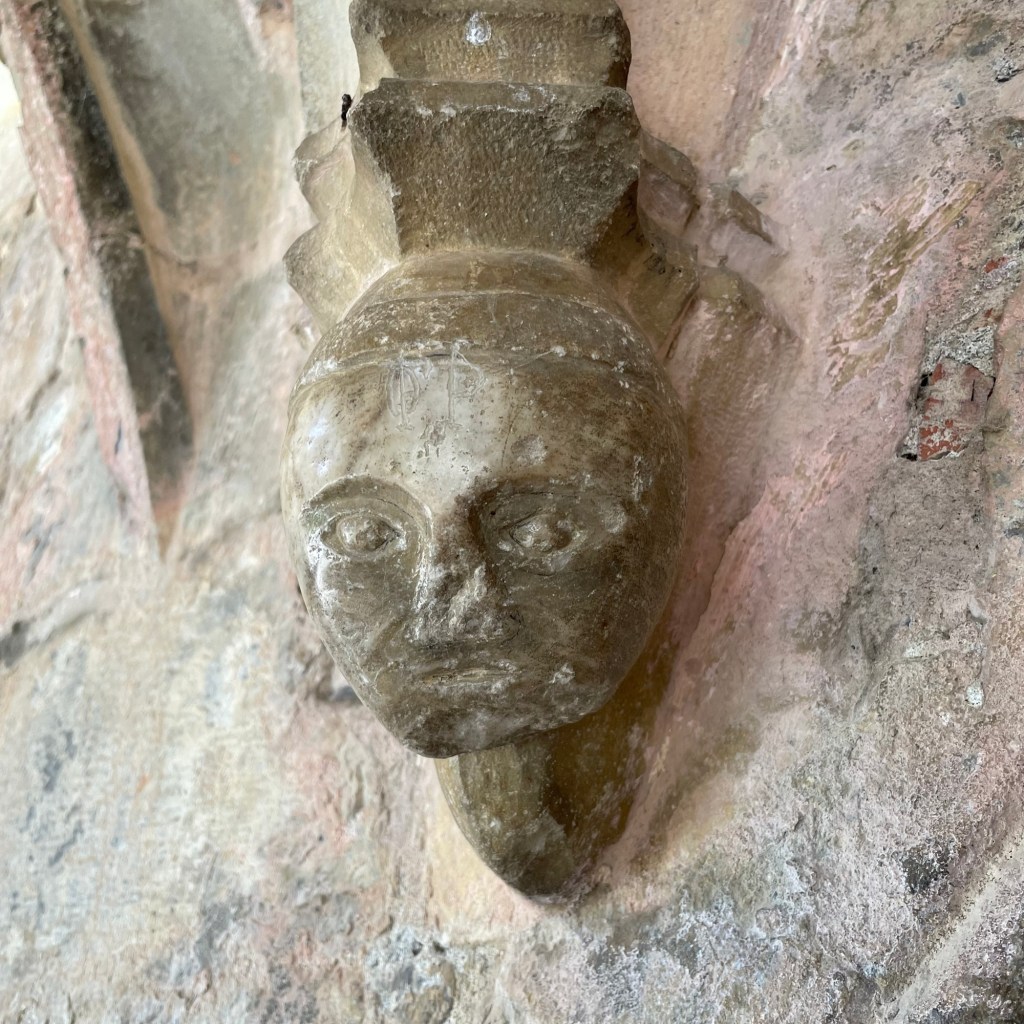
Filled with disappointed heads
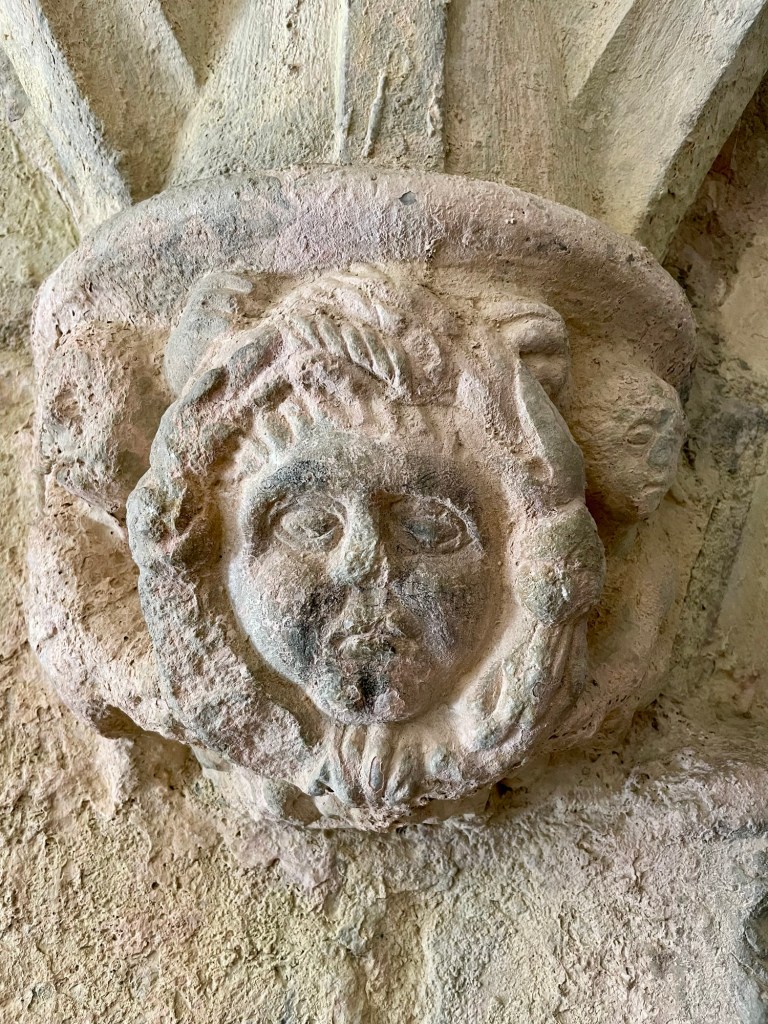
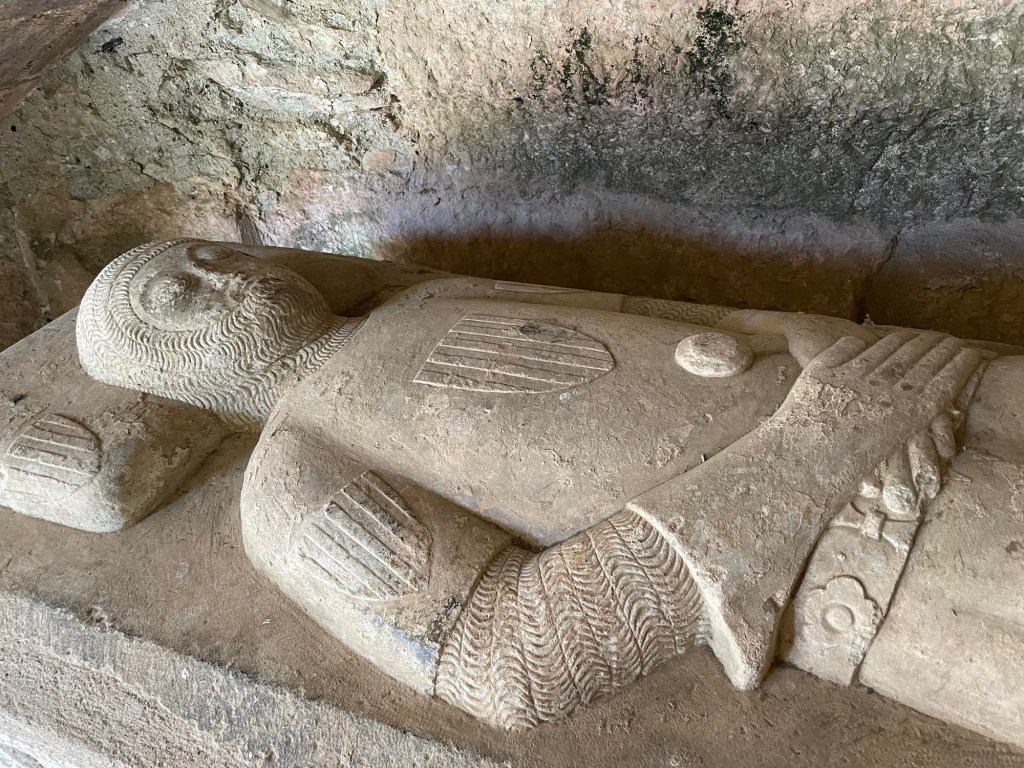
And an ex-knight
But wait! Back inside, there’s the organ!
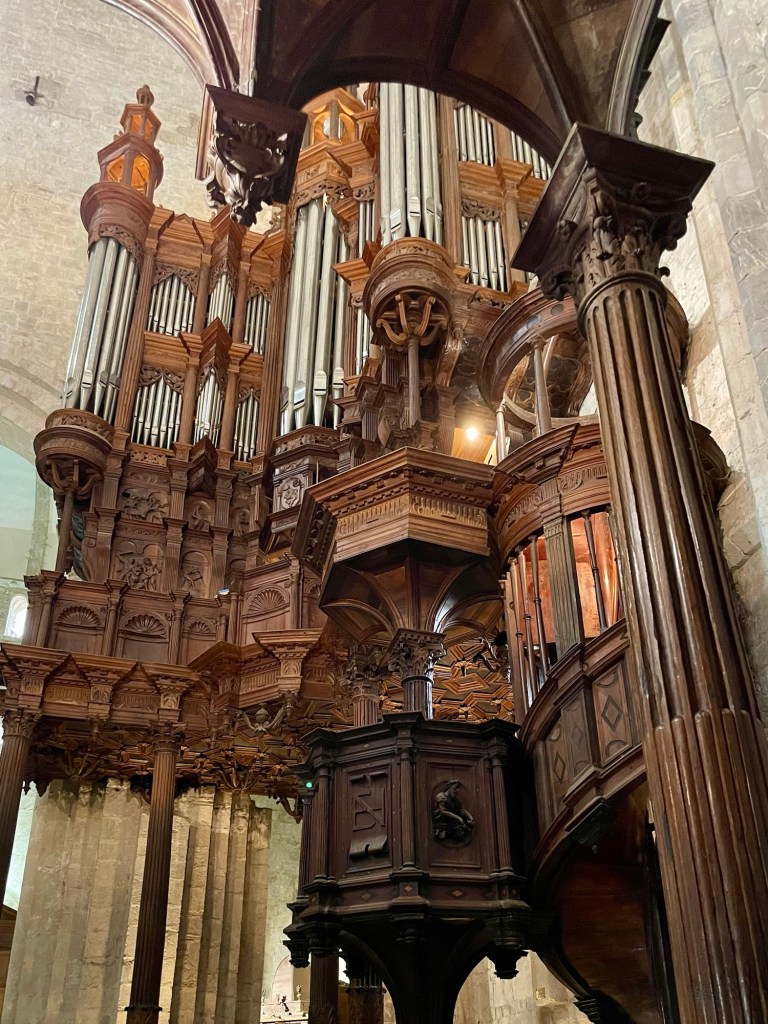
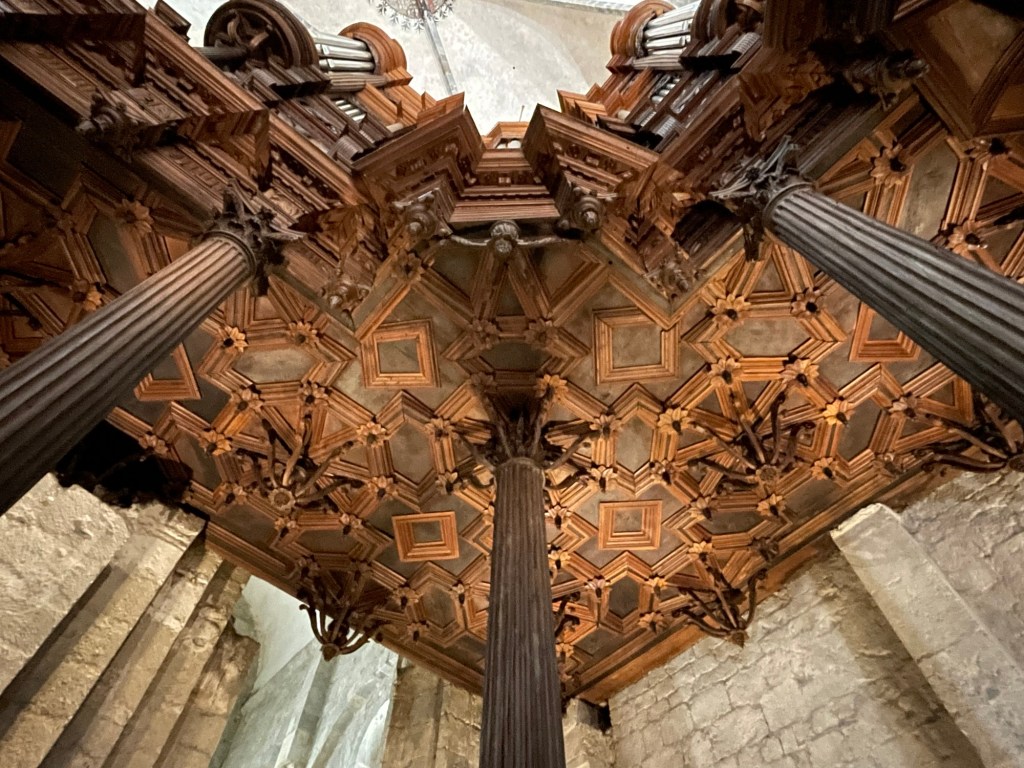
It’s also chock-a-block with sculpture.
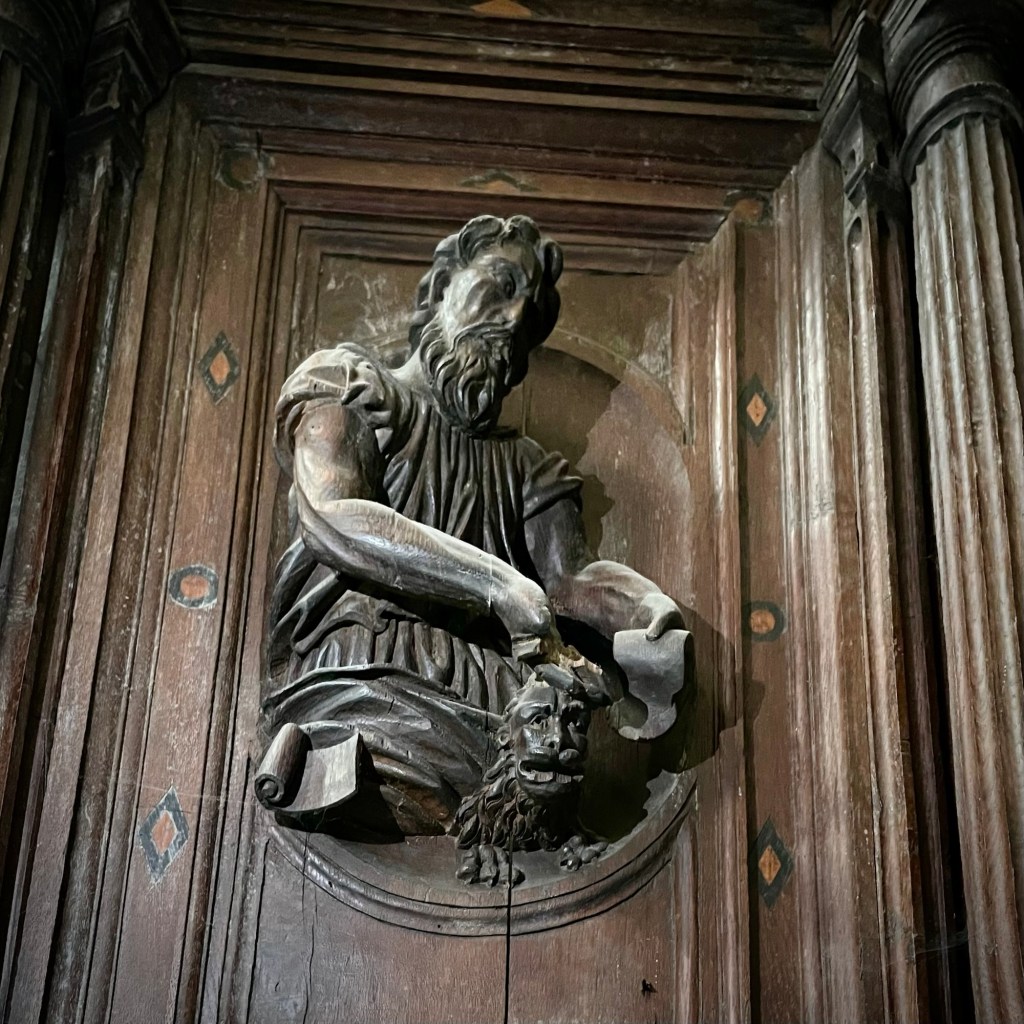
Super added bonus: there was an organist spending his vacation in St Bertrand who was given the keys to the cathedral so he could play whenever he liked. And he liked. We heard him during our two visits and again at night when we were lurking around the streets. More magic !
For as much as we travel and as much as I’m driven to go new places and see new things, I’m happy to call France home. If I couldn’t leave the country again, I could be content knowing that there’s thousands of magical spots like St Bertrand de Comminges waiting to be stumbled upon.
Cheers,
Maer